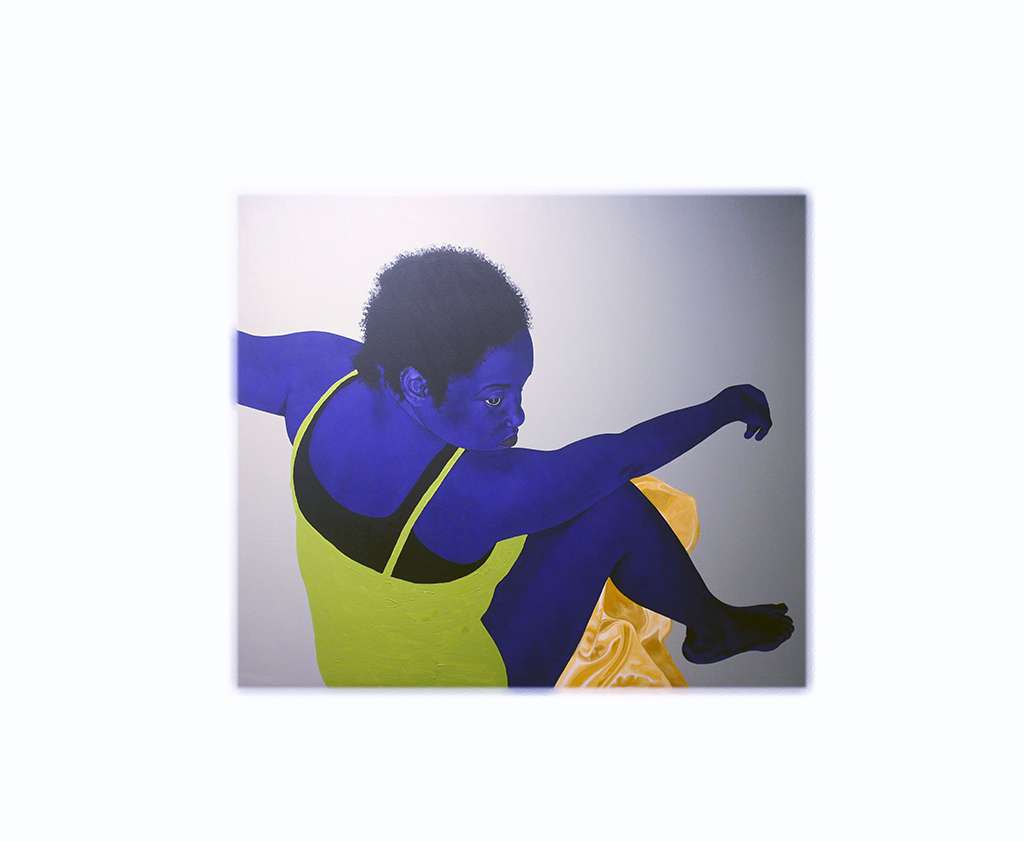
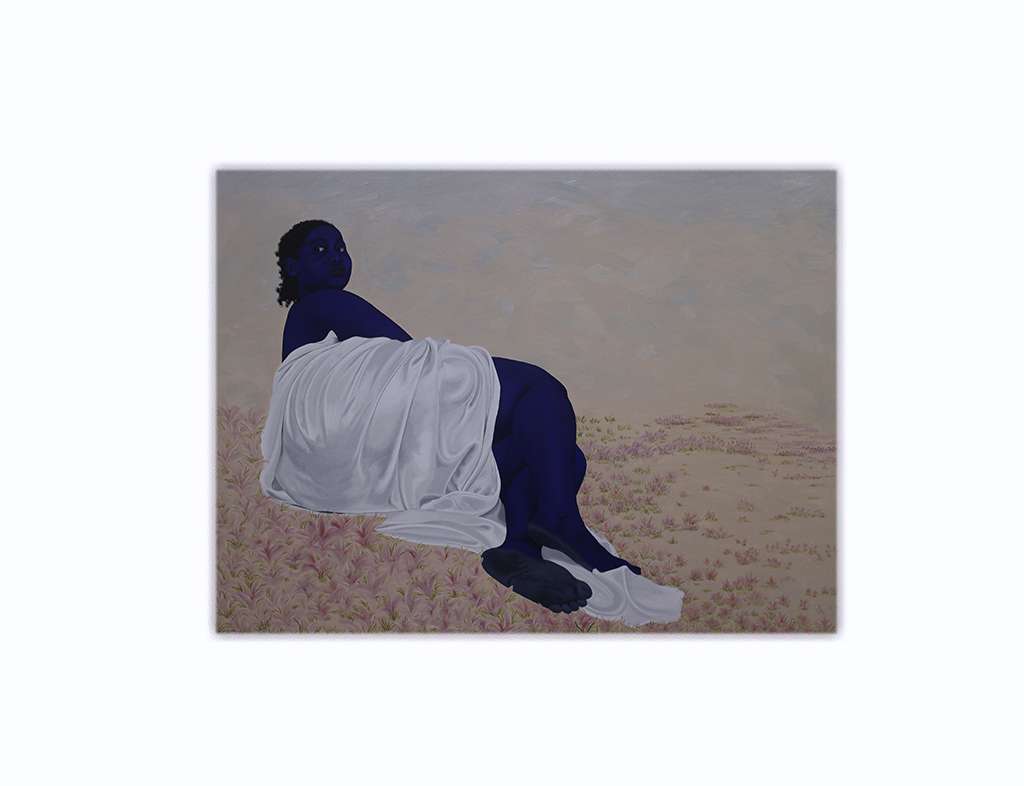
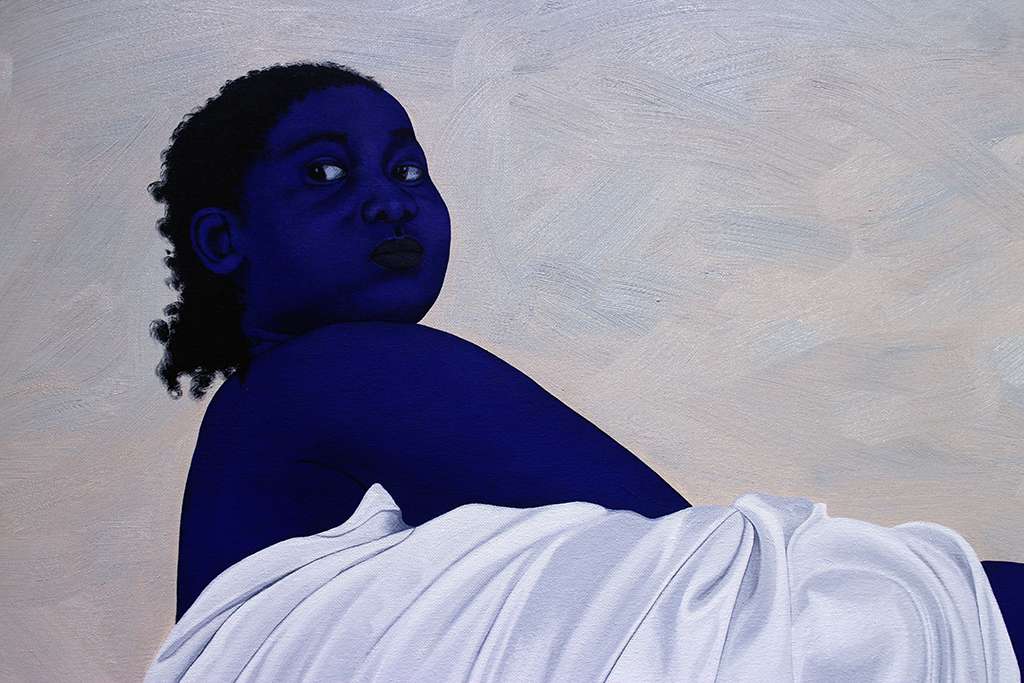
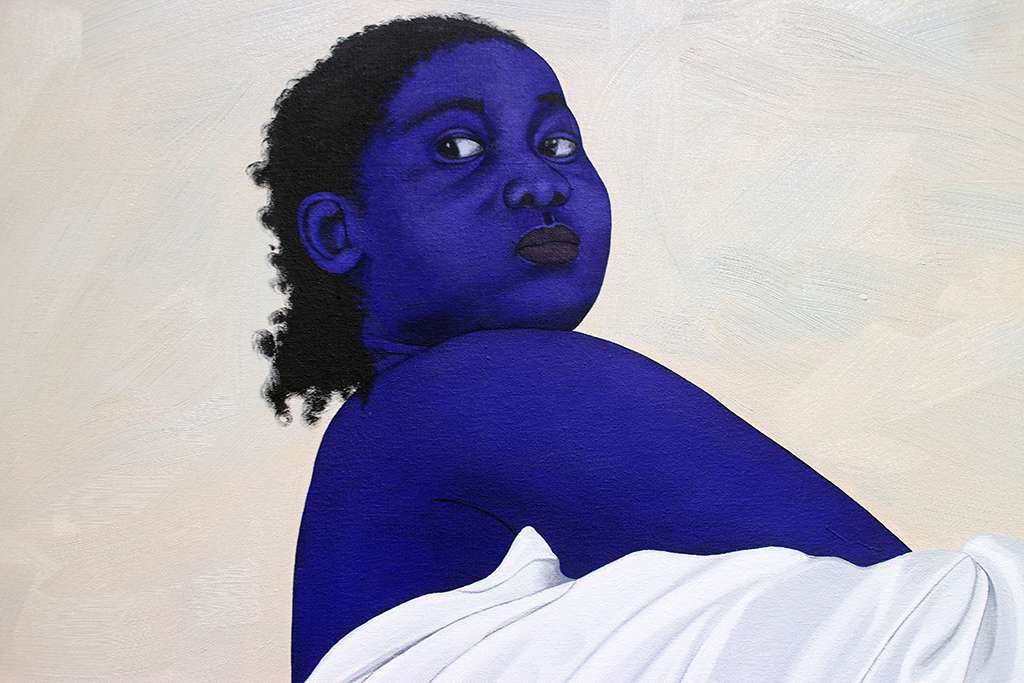
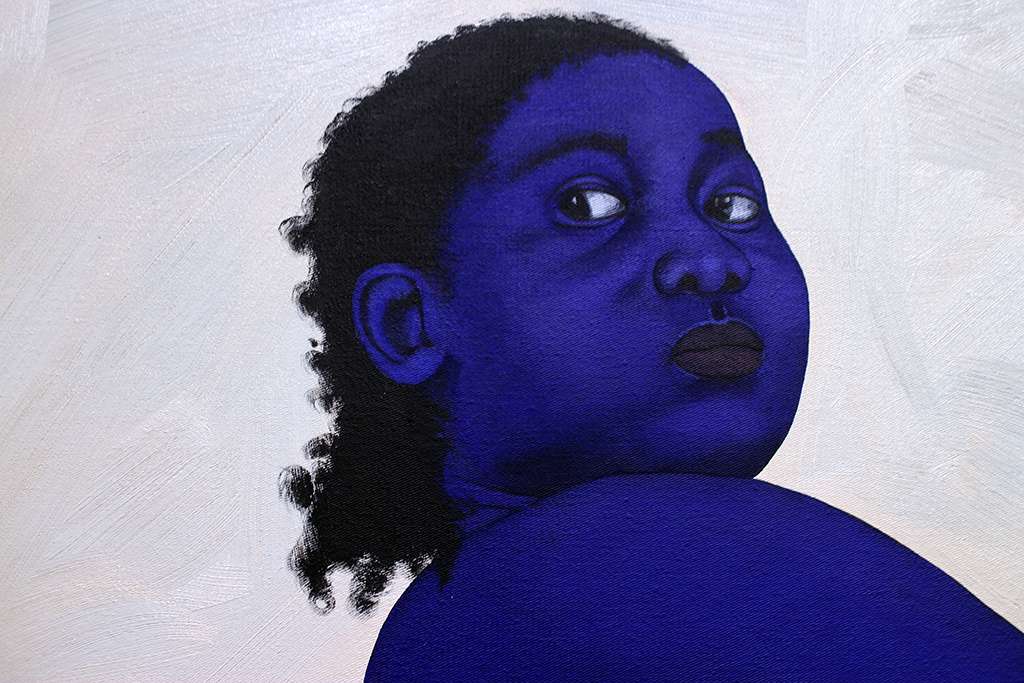
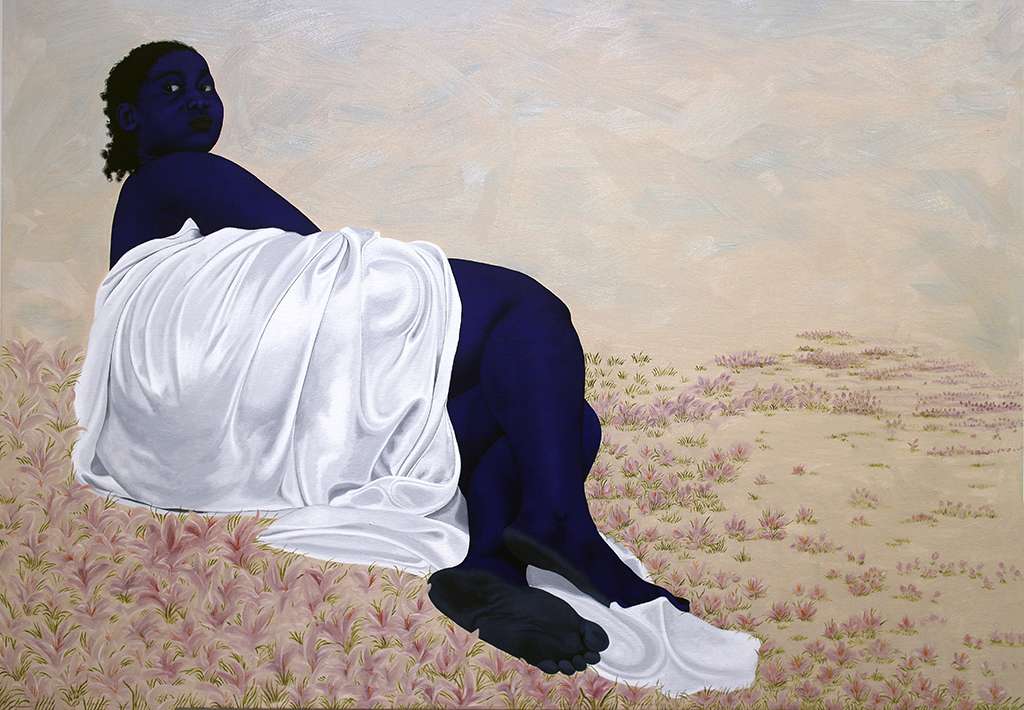
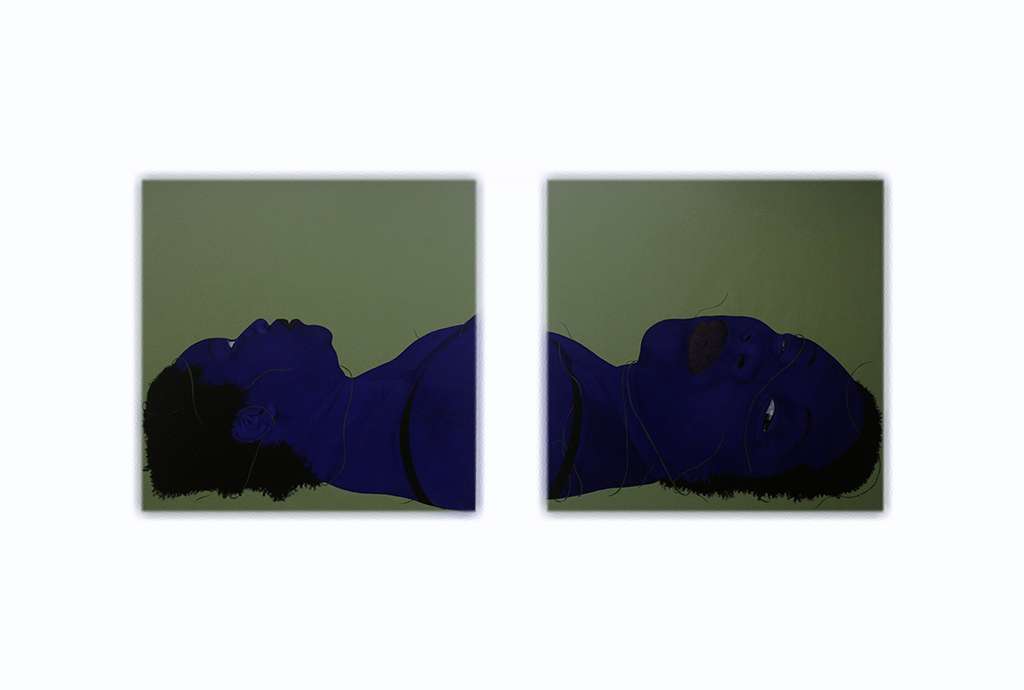
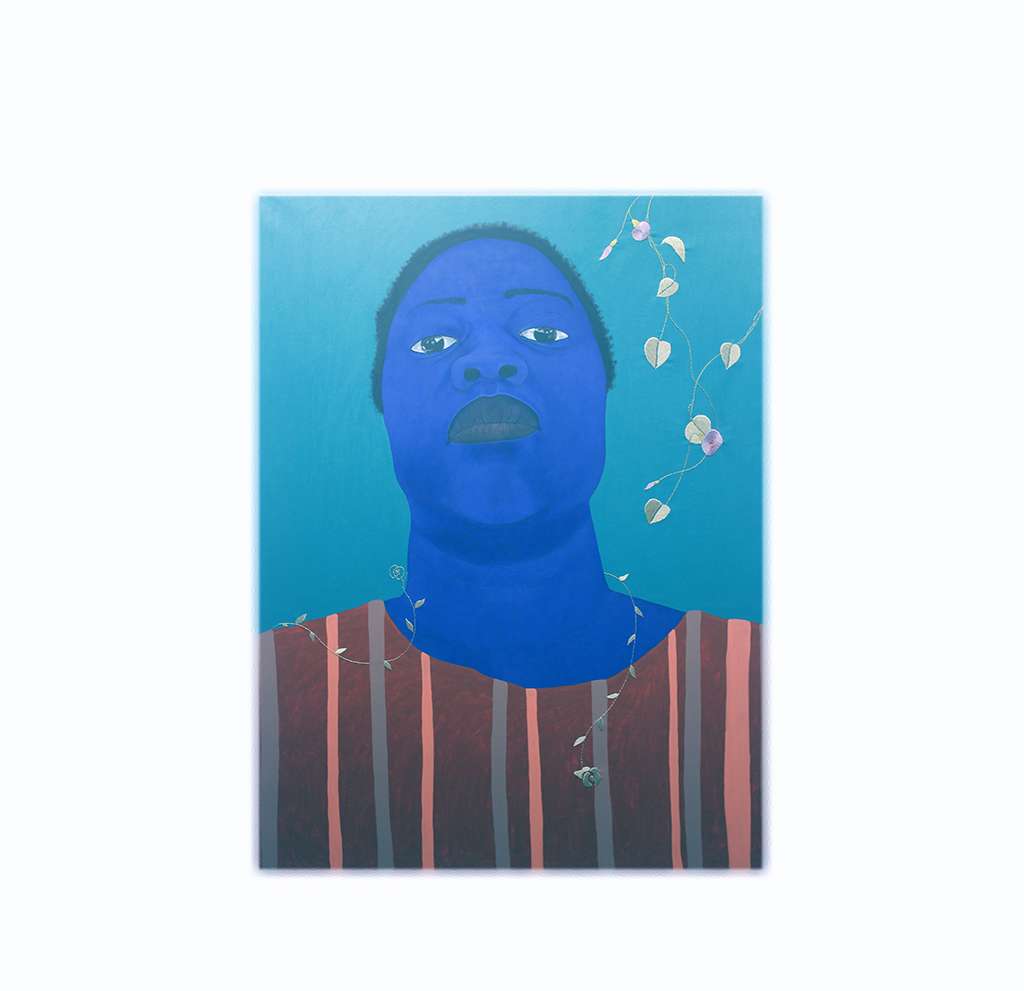
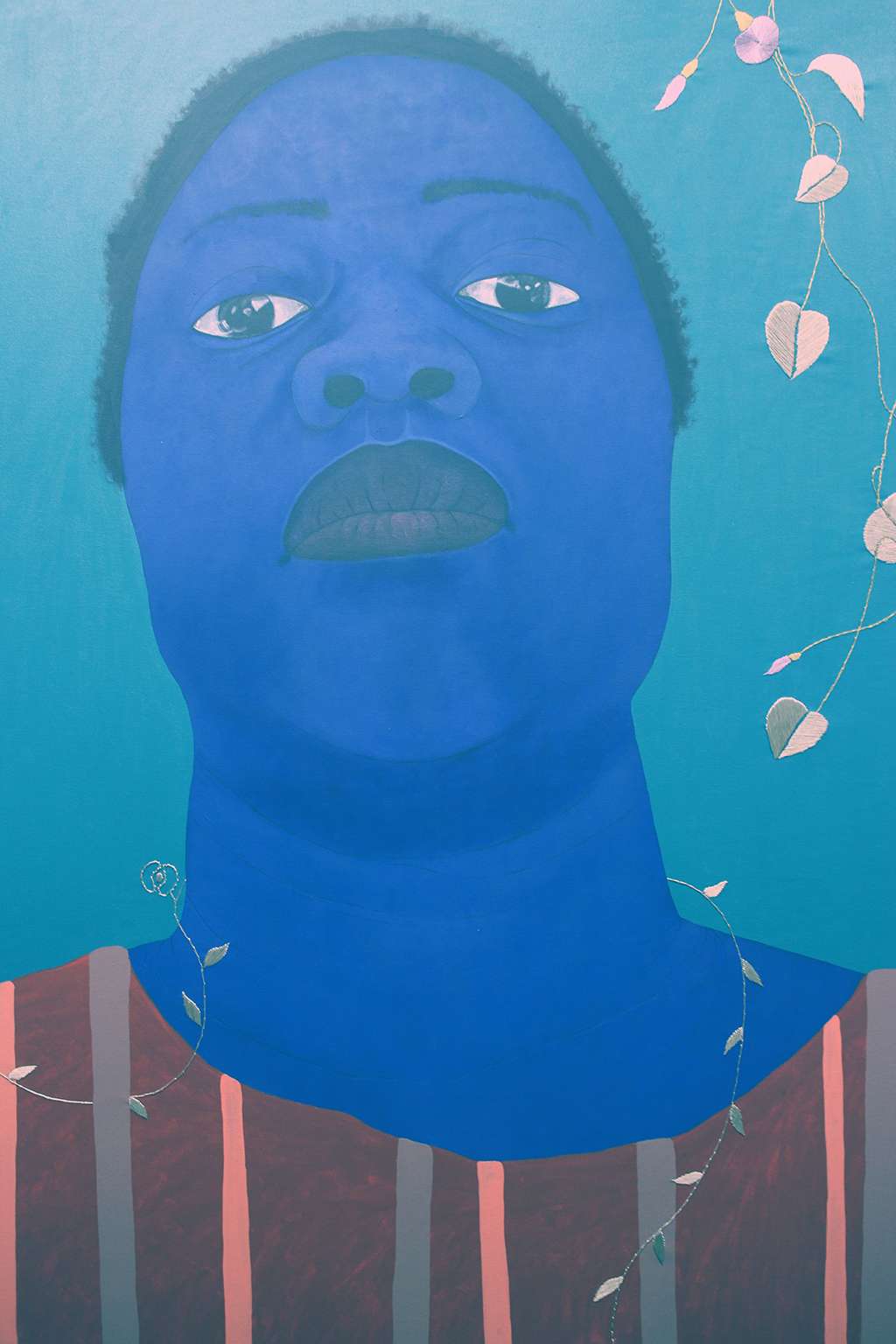
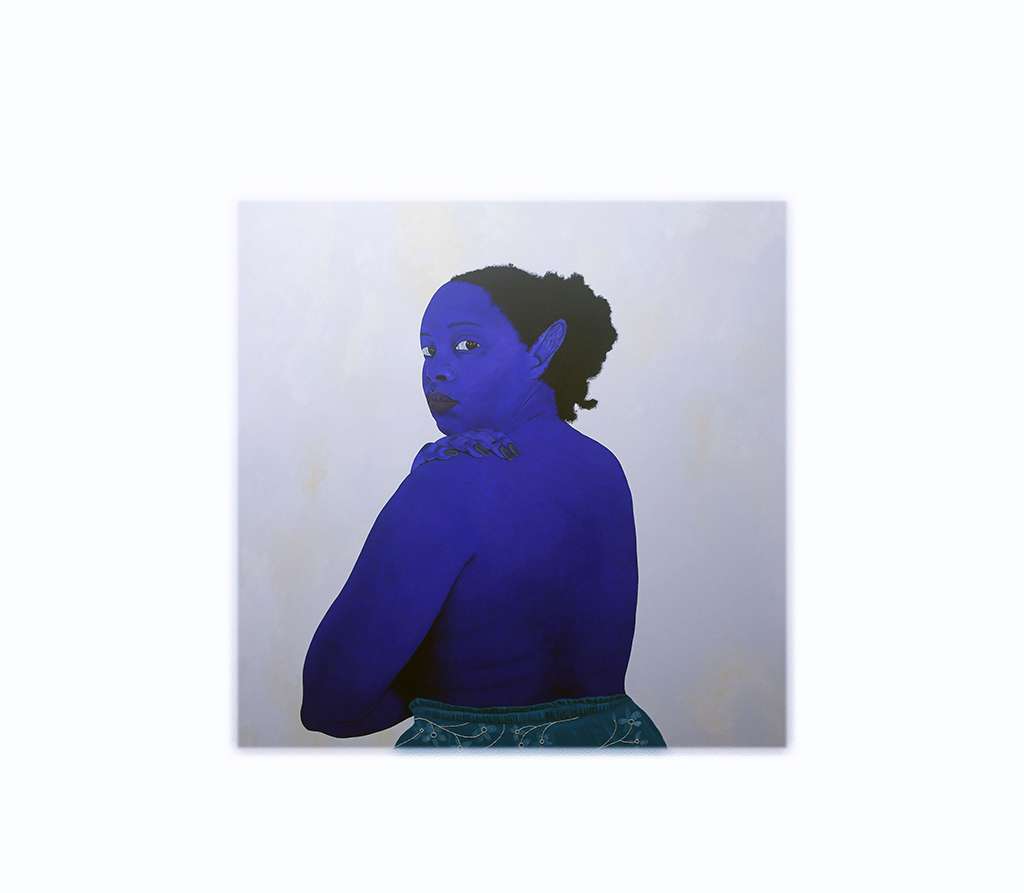
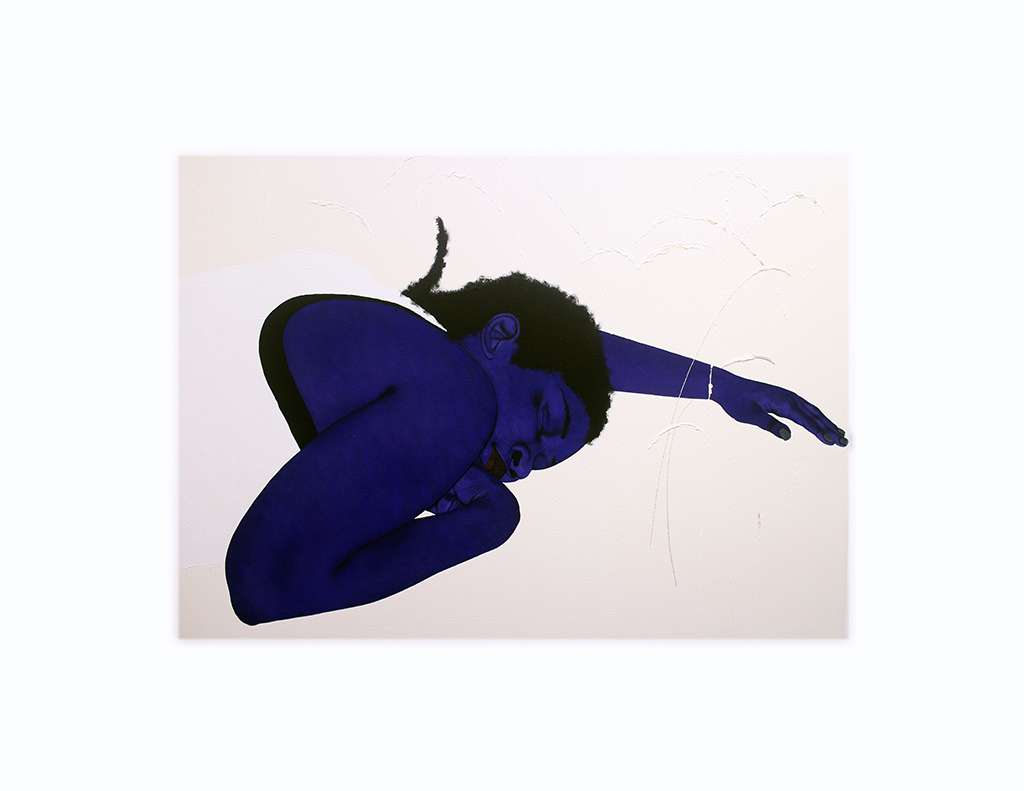
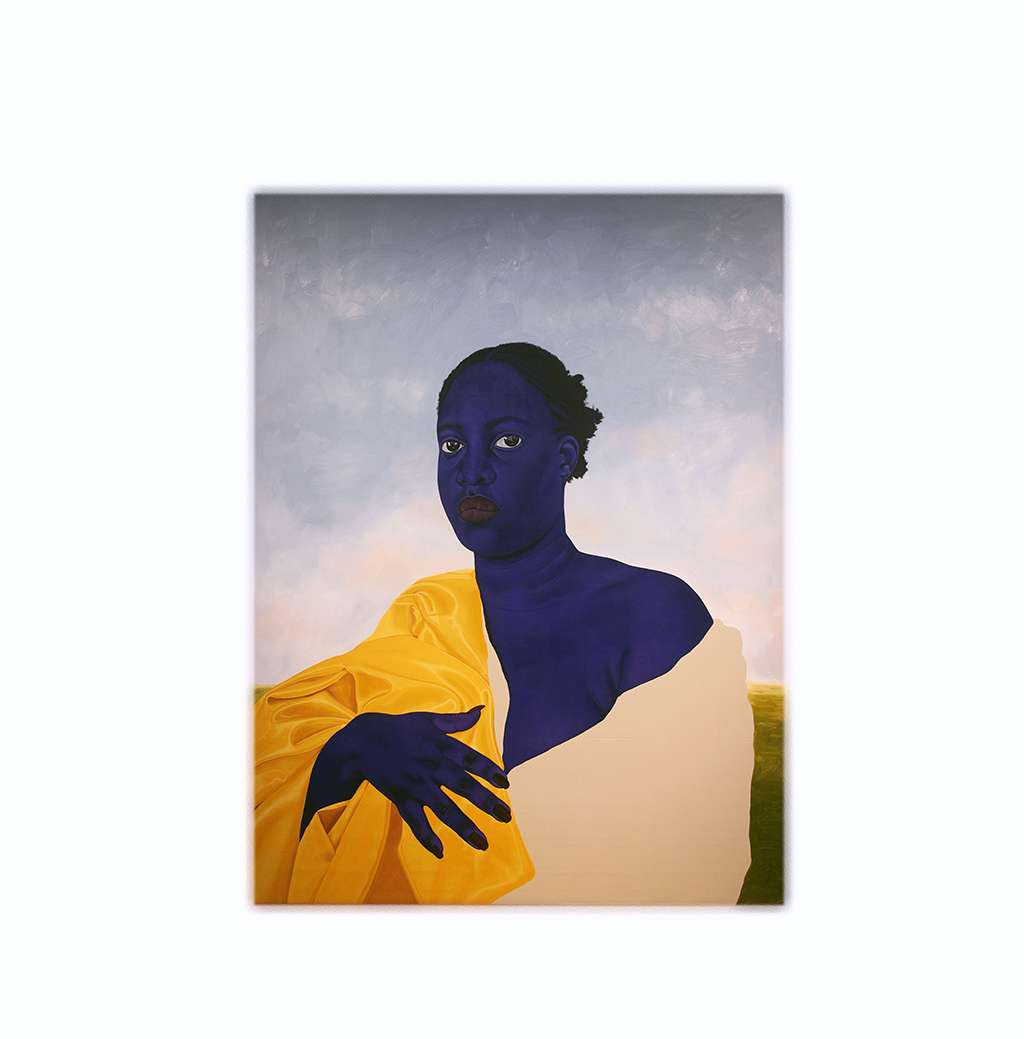
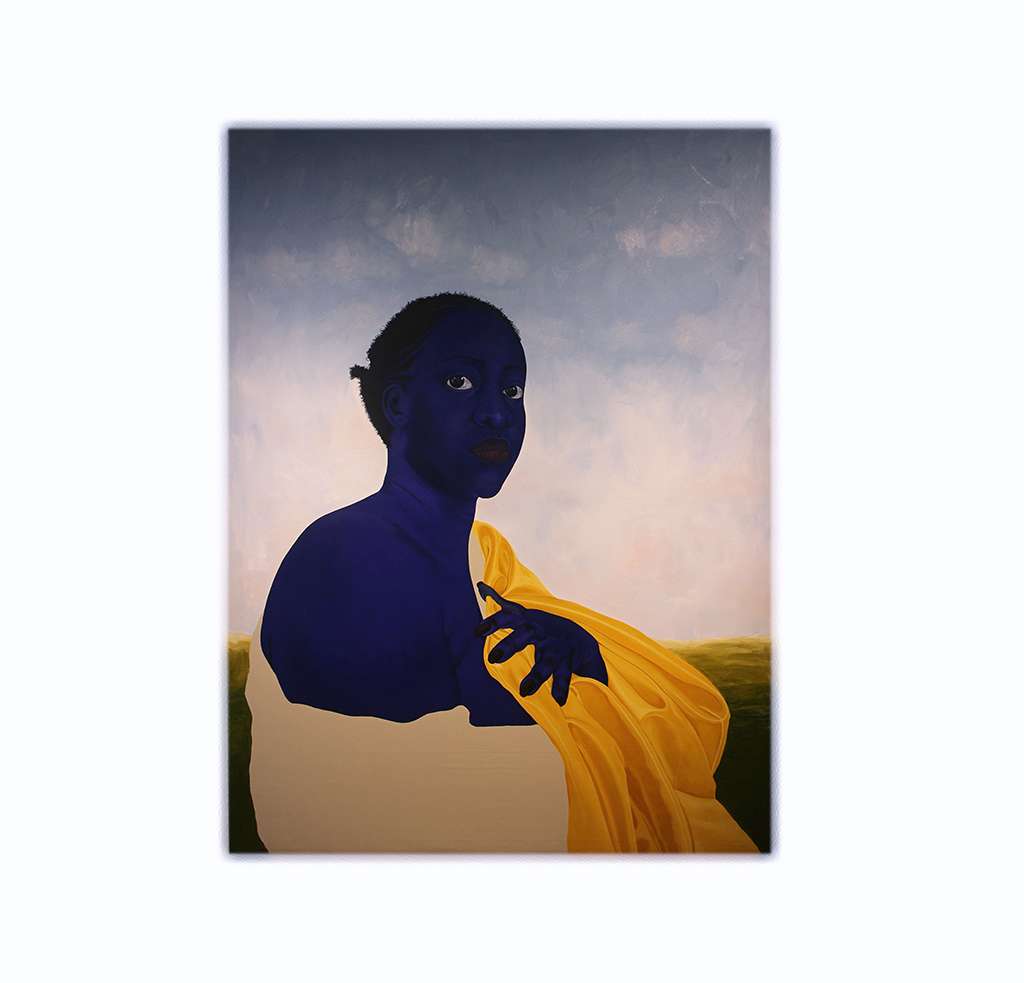
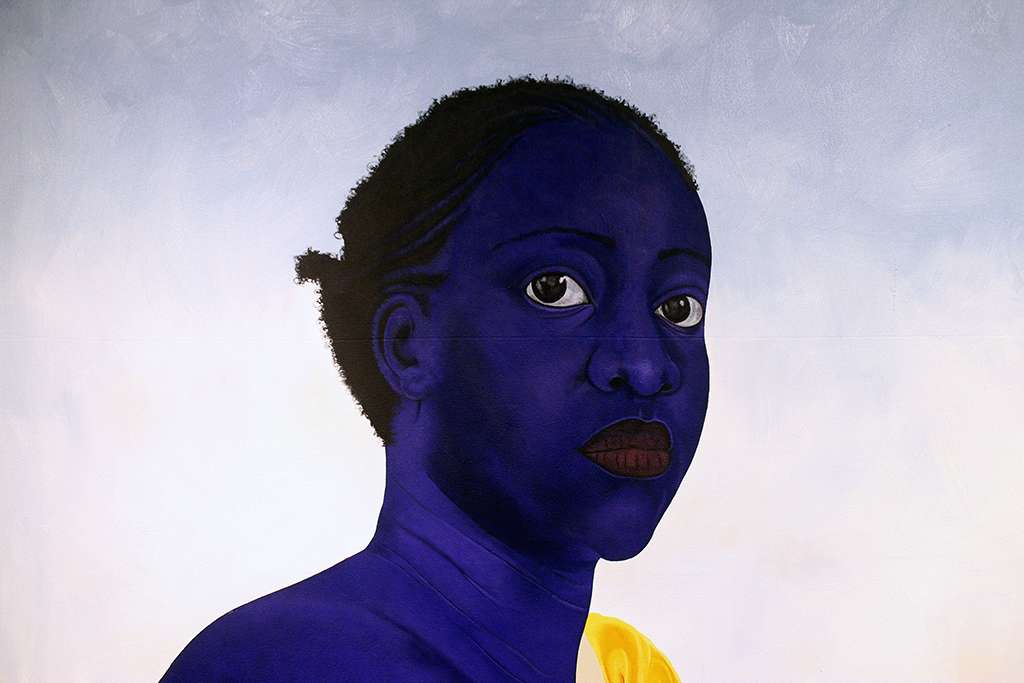
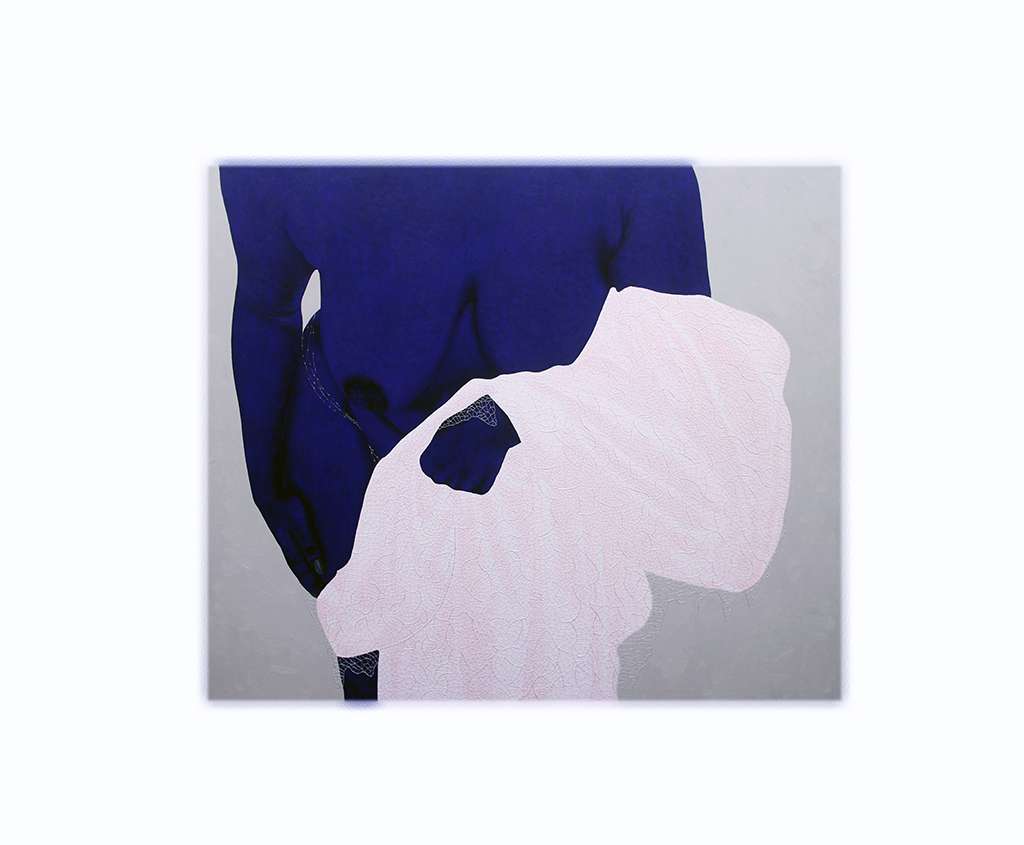
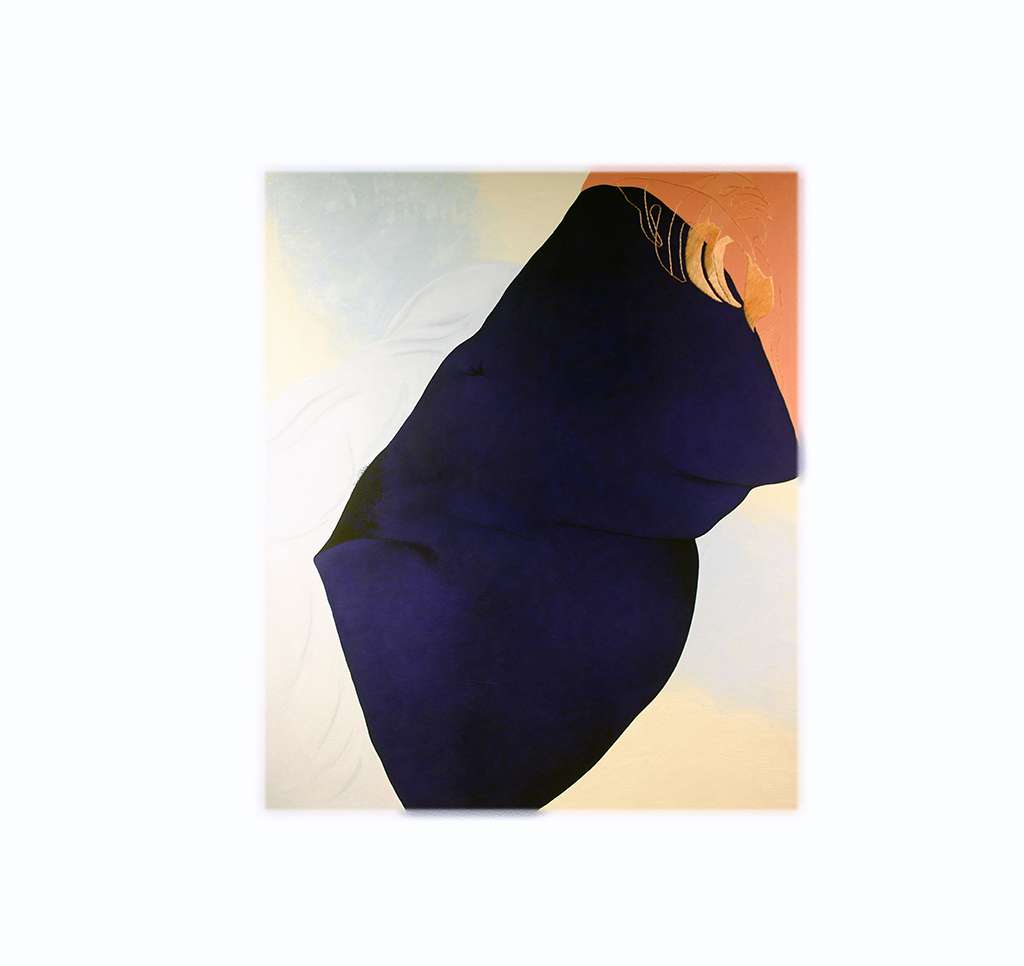
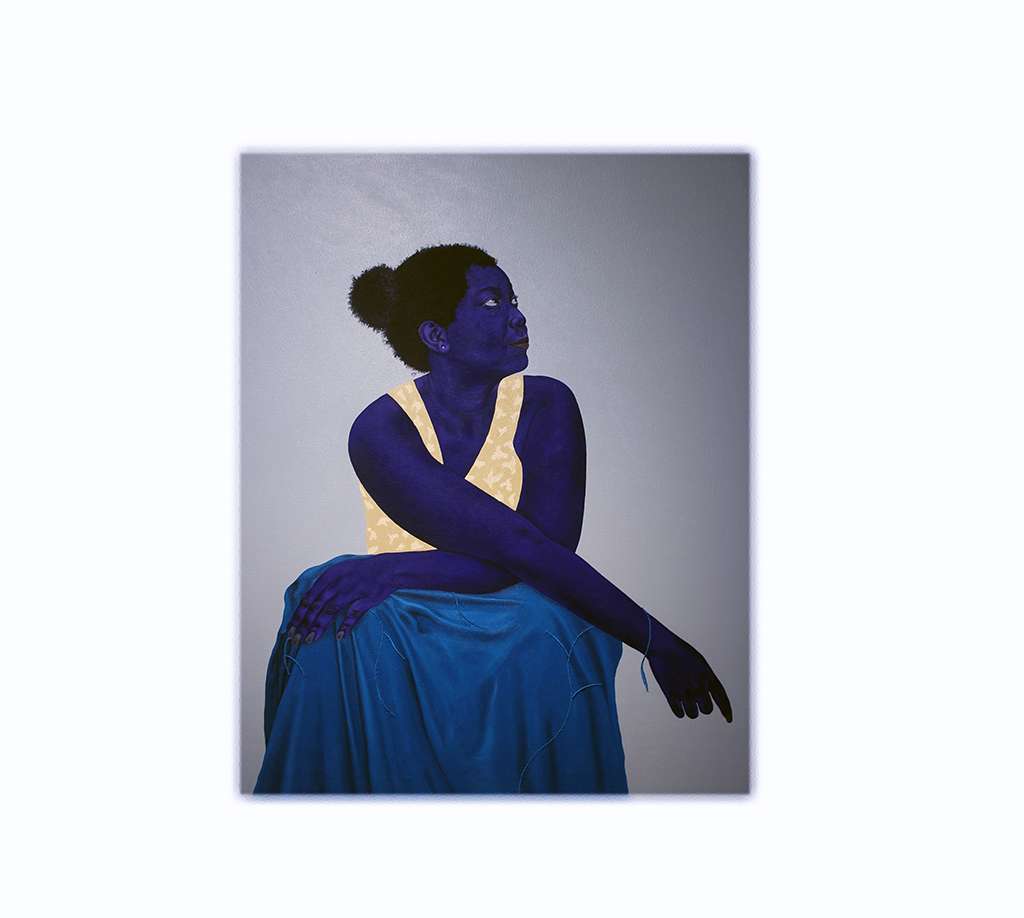
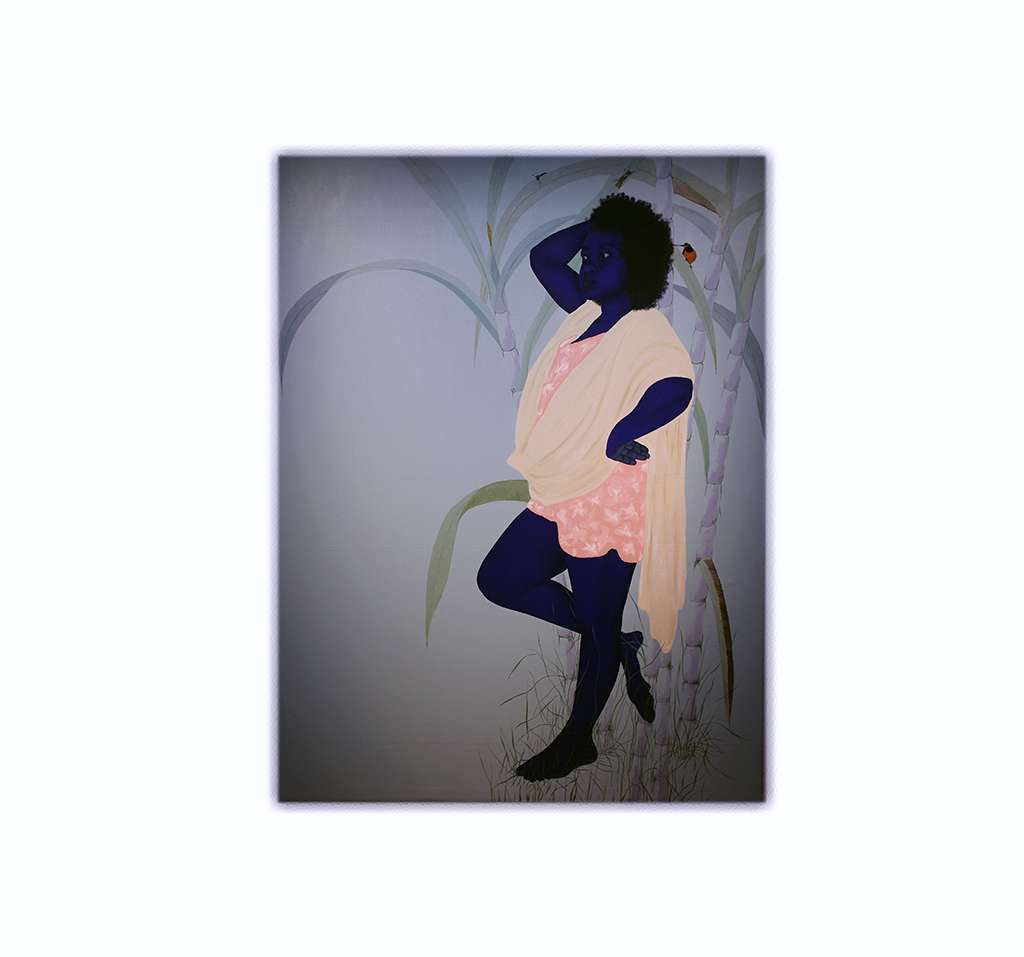
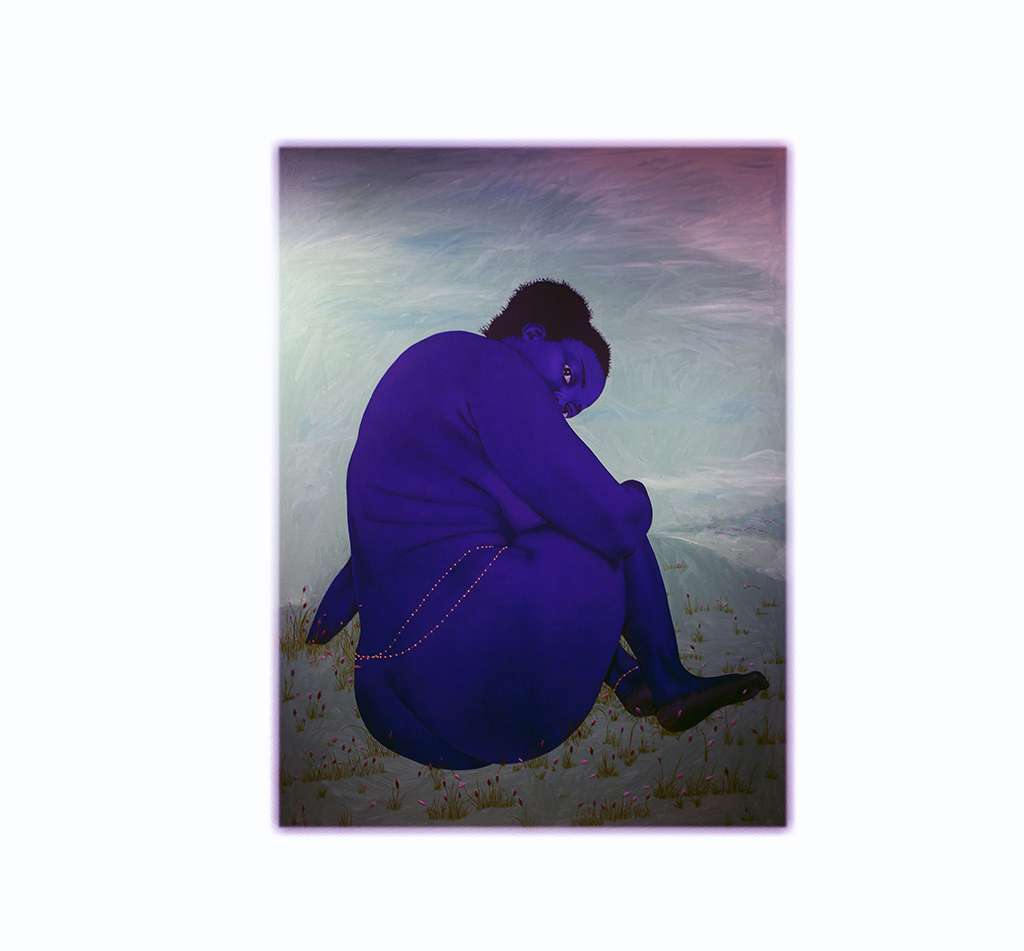
4me4you recently visited Unit London Gallery to experience Garden of Blue Whispers, a solo exhibition by Ugandan artist Stacey Gillian Abe.
MY PROCESS
Garden of Blue Whispers marks a period of flourishing for Abe, opening a new chapter in a journey that began with Shrublet of Old Ayivu, her first solo exhibition with Unit.
“Garden of Blue Whispers“
Immersive and deeply sensory, the exhibition unfolds as a meditation on memory, inheritance, and the quiet ways the body remembers what time has passed.
While that earlier body of work explored shared memory, this exhibition extends the conversation into the realm of the senses, how touch, sound, scent, and sight hold onto experiences long after their season has ended.
Drawing on recollections of time spent in her home village during Uganda’s dry seasons, Abe’s works are inspired by the transition from parched heat to the first tender rains.
Hot winds sweep dust across the West Nile region; crickets and grasshoppers announce the coming rainfall; the earth exhales as water touches soil once more. These sensory moments are woven throughout the exhibition, forming an atmosphere that feels both intimate and expansive.
Embroidery, a recurring motif, functions as both a symbol of femininity and a vessel of inheritance. Traditionally practiced by women and passed down through maternal lines, it becomes an act of continuity in Abe’s hands.
Having learned the craft from her mother, who learned it from hers, the artist stitches lineage directly into her work. By hand-sewing silk thread onto canvas, she transforms a domestic ritual into a meditative exploration of the Black woman’s body within painterly space.
The canvas becomes a site of refuge, an imagined garden, where her figures can exist freely, unbound by external constraint.
Indigo, the defining hue of Abe’s practice, plays a central role in this reimagined landscape. Once a material that defined and confined Black bodies through trade and labor, it is here reclaimed and reinterpreted.
For Abe, indigo signifies a new tribe, a “breed of Black” that transcends social, cultural, and historical boundaries. It becomes both skin and soil, grounding her figures in shared ancestry while allowing them to flourish beyond it.
At its heart, Garden of Blue Whispers is also a love letter to the artist’s late grandmother, a gesture of remembrance and longing for an invitation that can no longer be answered.
What remains are traces of her presence: familiar scents, sounds, and tastes suspended in memory, echoes of love preserved beyond their season.