4me4you visited Workplace Gallery to see Sertraline, a new series of paintings by Wang Pei that looks at how emotion and identity come under pressure and take shape in everyday life.
MY PROCESS
Borrowing its title from a widely prescribed antidepressant, the show doesn’t focus on the drug itself. Instead, it reflects on what it means when feelings are labelled, managed, and quietly standardised. The paintings ask what happens to emotional life in a world where even our inner states are increasingly interpreted, regulated, and contained.
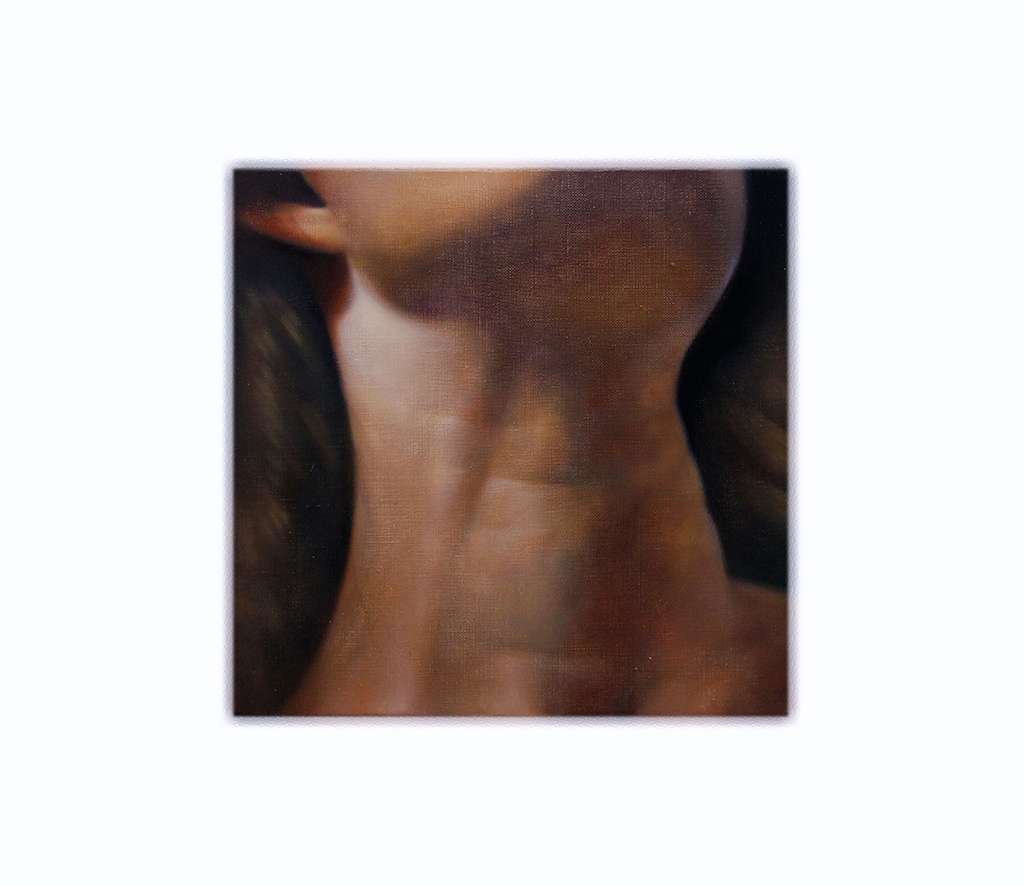
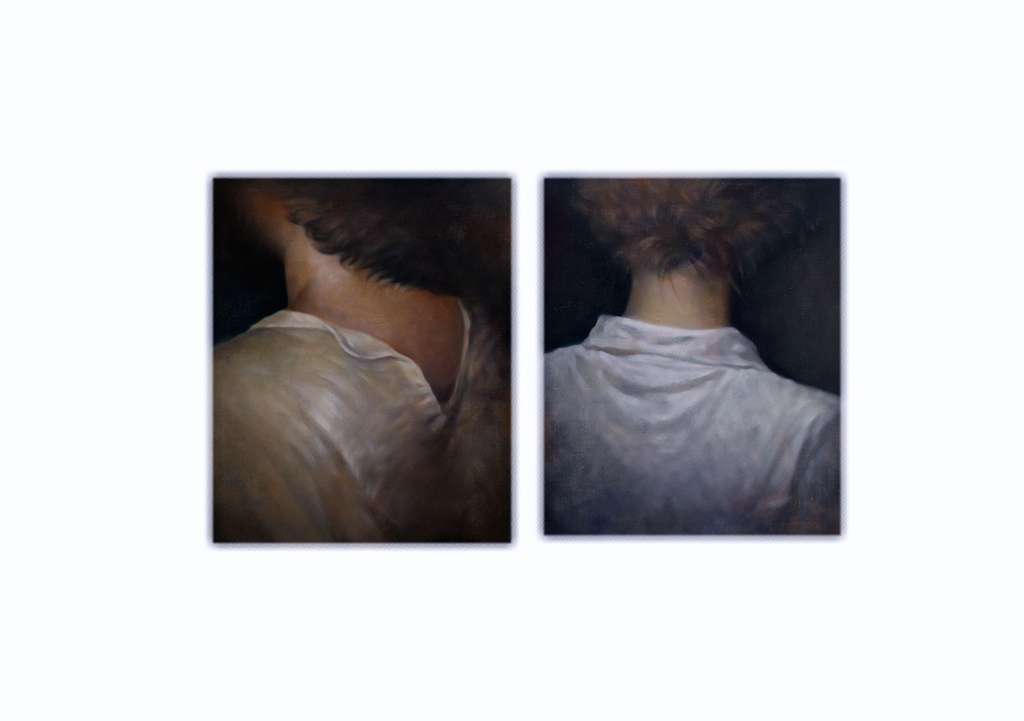
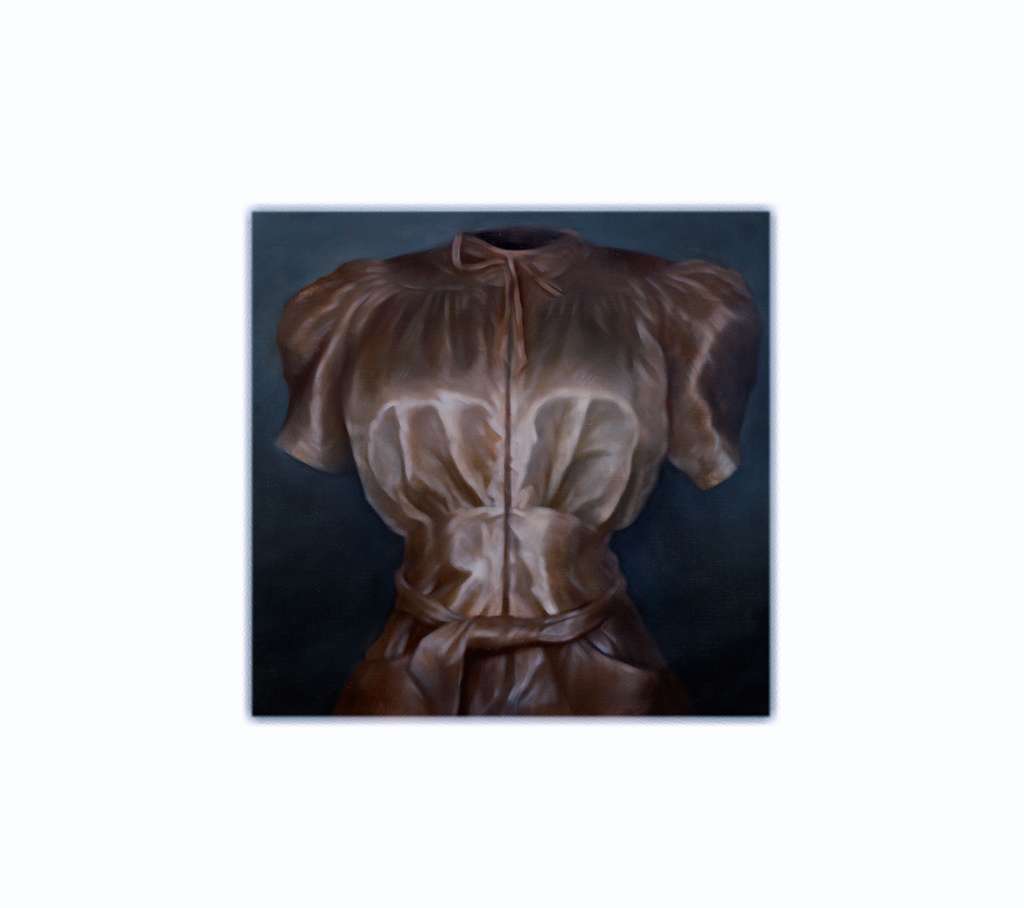
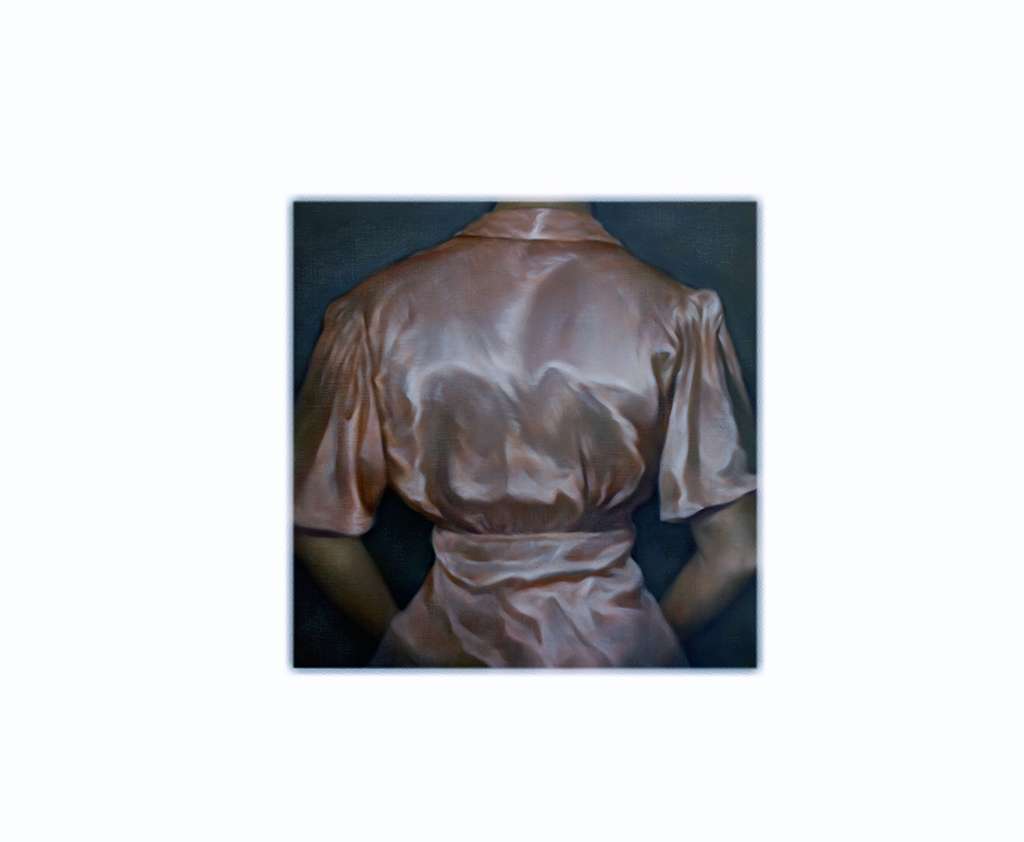
Across the gallery, many of the figures are turned away from us. We see the back of a neck framed by a sharp white collar, a body fading into shadow, shoulders wrapped in the reflective sheen of a silk dress. With faces withheld, the focus shifts elsewhere, to posture, to gesture, to the subtle language of clothing and surface. What people wear starts to feel psychologically charged, as if restraint and tension are held just beneath the fabric.
When faces do appear, they feel unsettled or broken into parts. In La chair, for example, a close-up face seems slightly out of sync with itself, eyes misaligned, lips parted as if caught mid-thought. It creates the sense of an image not fully settled, like it’s still forming. Identity here doesn’t sit still; it moves, shifts, and edits itself in fragments, almost like a film being cut in real time.
The way the paintings are made reinforces this. Thick and thin layers of paint sit on top of each other, scraped back or reworked again and again. You can see traces of pressure and correction, as if emotional states are being translated directly into physical marks. Some areas feel tightly controlled, almost held in, while others look more restless, like they couldn’t be fully smoothed over.
There’s also a sense that the works “think” in edits rather than fixed scenes. Space doesn’t stay stable, and time feels slightly off-kilter, with repeated gestures and textures appearing across different paintings like fragments of memory resurfacing. Each return feels slightly changed, as if meaning is being rewritten in small adjustments. In that space, solitude doesn’t read as emptiness, but as a quiet persistence, staying with one’s own perception even when everything around it feels noisy or inherited.
At a time when emotional numbness can feel like the easiest way through things, Sertraline pushes in the opposite direction. It slows things down, pays attention to surfaces and pauses, and asks the viewer to sit with the messier, more fragile side of feeling rather than looking away.